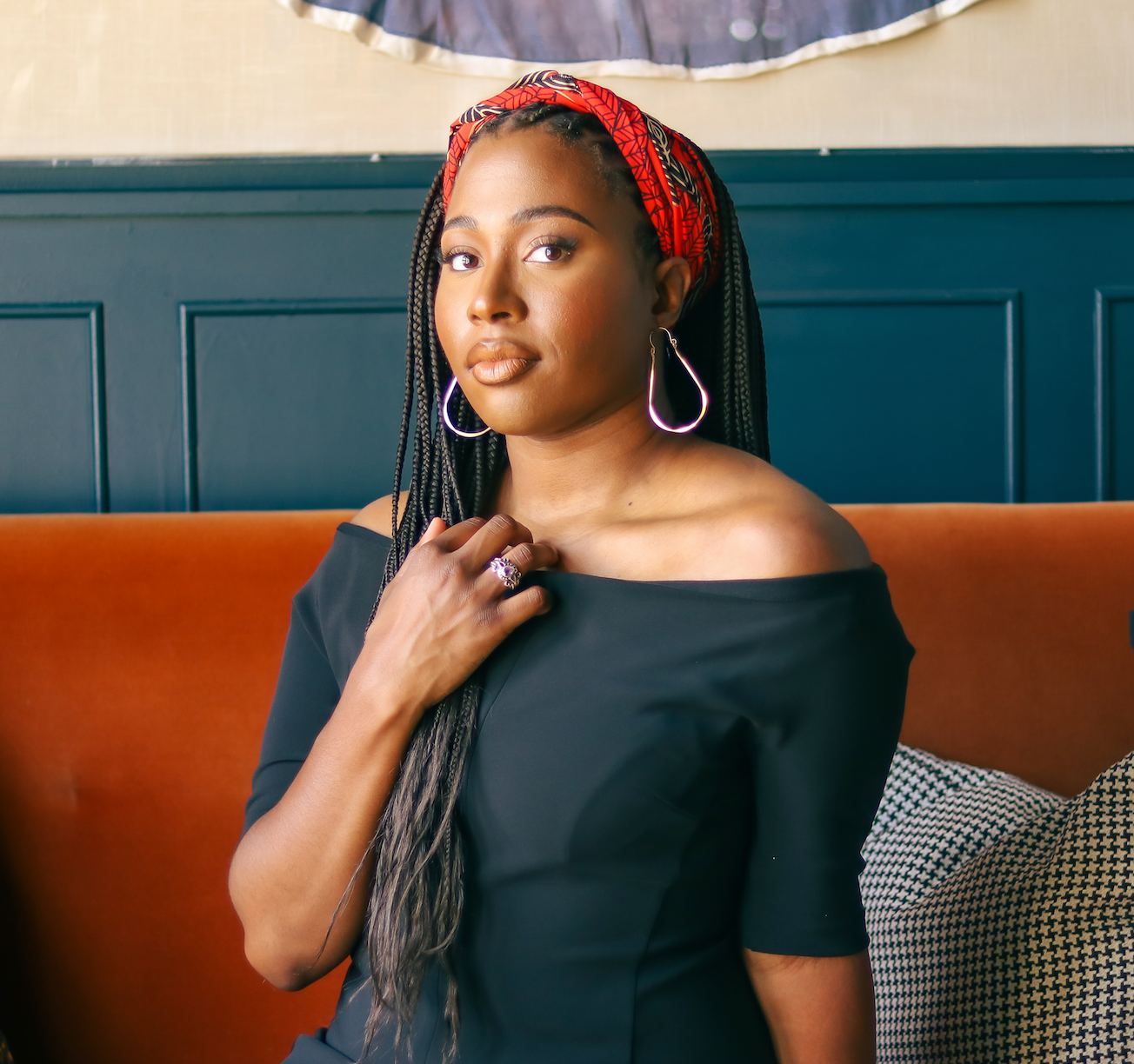
Last year, Avery Cunningham (MAWP ‘16) released her debut novel The Mayor of Maxwell Street via Disney/Hyperion. “The year is 1921, and America is burning. A fire of vice and virtue rages on every shore, and Chicago is its beating heart,” the book states. The novel follows a Black debutante who hires a low-level speakeasy manager to uncover the head of an underground crime syndicate, against the backdrop of Prohibition-era Chicago.
We chatted with Cunningham about the extensive historical research the book required, what inspired her to write the story, her experience in editorial for literary magazines, and what she learned from her time at DePaul.
This interview has been edited for clarity.
Ex Libris: What led you to DePaul’s MAWP program, and a career in writing and editorial?
Avery Cunningham: I became aware of DePaul when I was a senior in high school, and visiting and meeting members of the campus community was a really inspiring experience. My entire time at DePaul was really influential, and it cemented where I wanted to go professionally. It also cemented my perspective as a writer. In fact, I had no intention of being a novelist until I was encouraged to think about it more seriously by some of my professors.
Every single course I took was a building block in some way. But my time with the Writing Center was one of the most impactful experiences I had at DePaul. I worked at the Writing Center as a tutor and a fellow for about three years. The closest friends I ever made were part of the Writing Center, and it really taught me how to see writing in a more community-based way. The best aspects of storytelling come from sharing your ideas and perspectives with others and getting feedback.
I was just in Chicago recently visiting some old friends who were also in the Writing Center, and I was having difficulty with the book I’m working on, so we held an impromptu Writing Center session that was highly influential. We all kind of fell back into these old patterns of tutoring that we haven’t had to use in 10 years.
What advice do you have for students and writers?
Take advantage of the internship and work study opportunities that the English department makes very available to students. I think one of the first internships I had at DePaul was working as a proofreader for a translation of a work by a Russian novelist that was being translated into English. It was a very random experience, and it was my first real editorial experience, so it was a huge milestone for me. I wouldn’t have known about it if I hadn’t opened my emails and responded to opportunities when they presented themselves.
I really encourage students to take on every opportunity they reasonably can, because each one of those little moments and experiences will help develop you professionally and personally, and allow you to form closer relationships with your faculty and those in the industry you want to work in.
Also, you should always go to book readings and signings! If your aspirations are to be a writer of any sort, then these types of readings can be a great way to learn more about the craft and to connect with other writers. Writers in general are usually people who are really excited to support and encourage you. If you reach out to these folks after the fact and say, ‘Hey, I go to DePaul and I went to your signing and was really moved by everything you had to say,’ they will form and maintain a relationship with you.
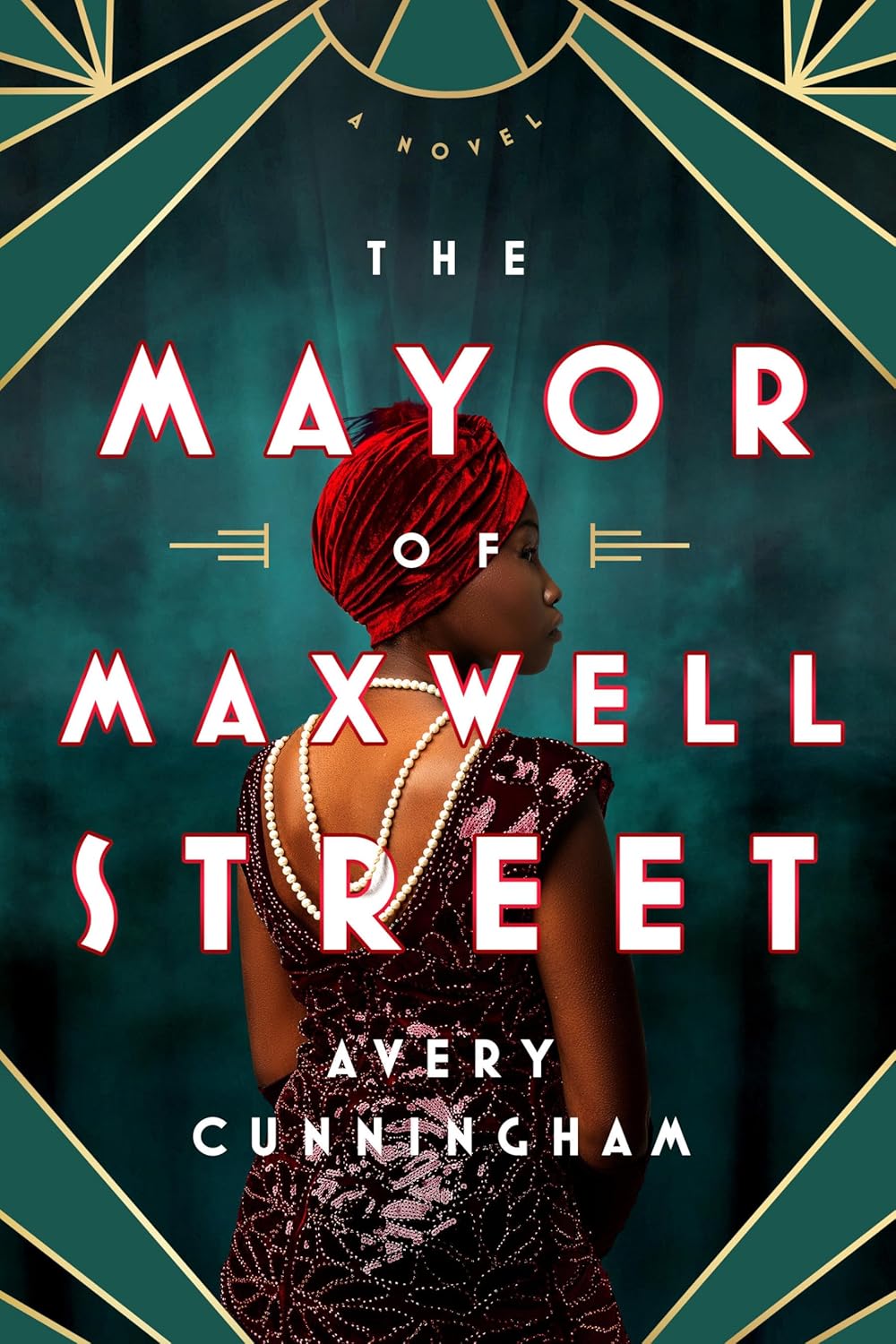
Your debut novel, The Mayor of Maxwell Street, came out last year. What sparked the idea for the book?
The process for the book first began back in 2020, and I suppose the ideation came first when The Great Gatsby entered the public domain. There was a good frenzy among a lot of writer friends, where everybody was rereading The Great Gatsby, especially as we were entering a new 20’s era. Reading Gatsby as an adult, after reading it as a younger person, was a very interesting experience. While I was reading it, my mom shared an article with me about a new literary theory where you can argue that Jay Gatsby was a Black man passing for white. Now, I don’t think that was Fitzgerald’s intention, but that opened a new perspective into the 1920’s for me, and this concept of the American Dream in Gatsby. It then becomes a requiem for the American Dream, and how so many individuals could only achieve this type of mythical ascendancy if they cauterized parts of themselves to be more immutable or digestible or to fit more snuggly into the status quo.
Around the same time, I was inspired to look more into the history of the Black upper class in America. I think that was an era in film and TV, and media in general, where we saw a lot of colorblind casting, which was wonderful, but sometimes it was handled a bit superficially. I wanted to learn more about instances in American history where there were societies that were intentionally diverse. That led me down a path of learning more about the history of different Black communities throughout America, especially communities that prided themselves in education and who were considered more financially well-off.
When the opportunity came to write The Mayor of Maxwell Street in early 2022, all of those ideas came together.
The Mayor of Maxwell Street is rich in historical context. What was the research process like for you?
The research is always ongoing. But I tried to approach it by starting with primary foundational texts before getting into the prose and narrative. For me, that started with The Warmth of Other Suns by Isabel Wilkerson, which is nonfiction and is a story about the Great Migration, [when more than six million Black Americans from the South moved to cities in the North and West]. The book was a turning point for me.
When I first started thinking about Maxell Street, I envisioned this very flashy kind of empire approach to the 1920’s, and Wilkerson’s work showed me what that period in American history was really like for Black Americans, especially those who came out of the South into new cities and communities like Chicago. Her work created a new perspective for me about the Black experience and allowed me to see Maxwell Street on a much broader scale, not just within the world of these characters in the story.
Our Kind of People: Inside America’s Black Upper Class by Lawrence Otis Graham was another wonderful perspective. It provides a detailed overview of the different Black elite communities throughout the United States and their history.
There is also an administrative document that was produced in 1919 by the City of Chicago after the race riots. I believe it was an attempt to understand the Black condition in Chicago and to understand why and how the race riot could occur. It’s generally referred to as The Negro in Chicago. It is a very long account of where Black Americans were living and working, the conditions of where they were and where they lived. It is full of narratives and interviews about where people came from. There are interesting interviews with citizens and Chicago employers, like bank managers about why they would or would not offer loans to Black Americans coming into Chicago.
Then, as for the writing process, I was still researching. For example, if I wanted to write about a room, I had to research what would realistically be in the room at that period of time. If you want to have a detail about a fan blowing, then you have to do research into where the development of electrical fans was at that point in history. If you want to talk about what people were drinking, you have to do research into what brands were popular.
So, that kind of research is pretty consistent, but research can also be a bit of a blackhole.
What do you hope people take away from the book?
One of the best parts about having the book out in the world is getting to hear people’s opinions and perspectives. I have had the honor of being invited to different book clubs when they discuss the book, and it’s great hearing people argue about how they feel or what they took away from the entire experience. I would never want to assign a point to the story. But what I said traditionally is, if there is any kind of lesson to be taken from Maxwell Street, it’s that wealth will not save you. The right name will not save you. The right job will not save you. The right love will not save you from the systemic issues that govern this nation or world. Each of us have to decide what that means for us if we’re going to be willing to live for ourselves and prioritize our happiness, our own peace and advancement, or live for the generations that came before and that are yet to come. When you’re fighting against an oppressive system, then that choice is going to look a little bit different for everyone.
How has your editorial experience in literary magazines helped inform your own writing?
It has allowed me to see my writing with a little bit of distance. I am able to critique myself pretty honestly and severely. It has taught me to value the structure of a sentence and to try to write in the best way possible that fits the story, the characters, and tale that I am trying to weave. I do feel like working in editorial spaces and helping other writers with their work has allowed me to read my writing as if it were somebody else’s writing, and to edit it in a way that isn’t terribly personal.
What currently excites you about the literary world?
I really love how many new voices there are! Every debut I have read recently has been so vibrant, and it’s so inspiring that people are actively searching for newer writers and stories that challenge them or make them uncomfortable, reflective, or nostalgic. It feels like a really great time to be a storyteller. But of course, the industry is always going to be an industry. Once you become a published writer, there is a really weird line between art and entertainment that you always have to be aware of. Individuals may be coming to your work to be entertained, and you don’t have to write to that standard, but you have to be aware of it.
But I am humbled by how good everyone is, and this just makes for a great experience for readers, no matter what type of story you’re interested in, no matter what type of style you want to find. There is someone in that space who is doing exceptional, beautiful work, and who is writing for you.
