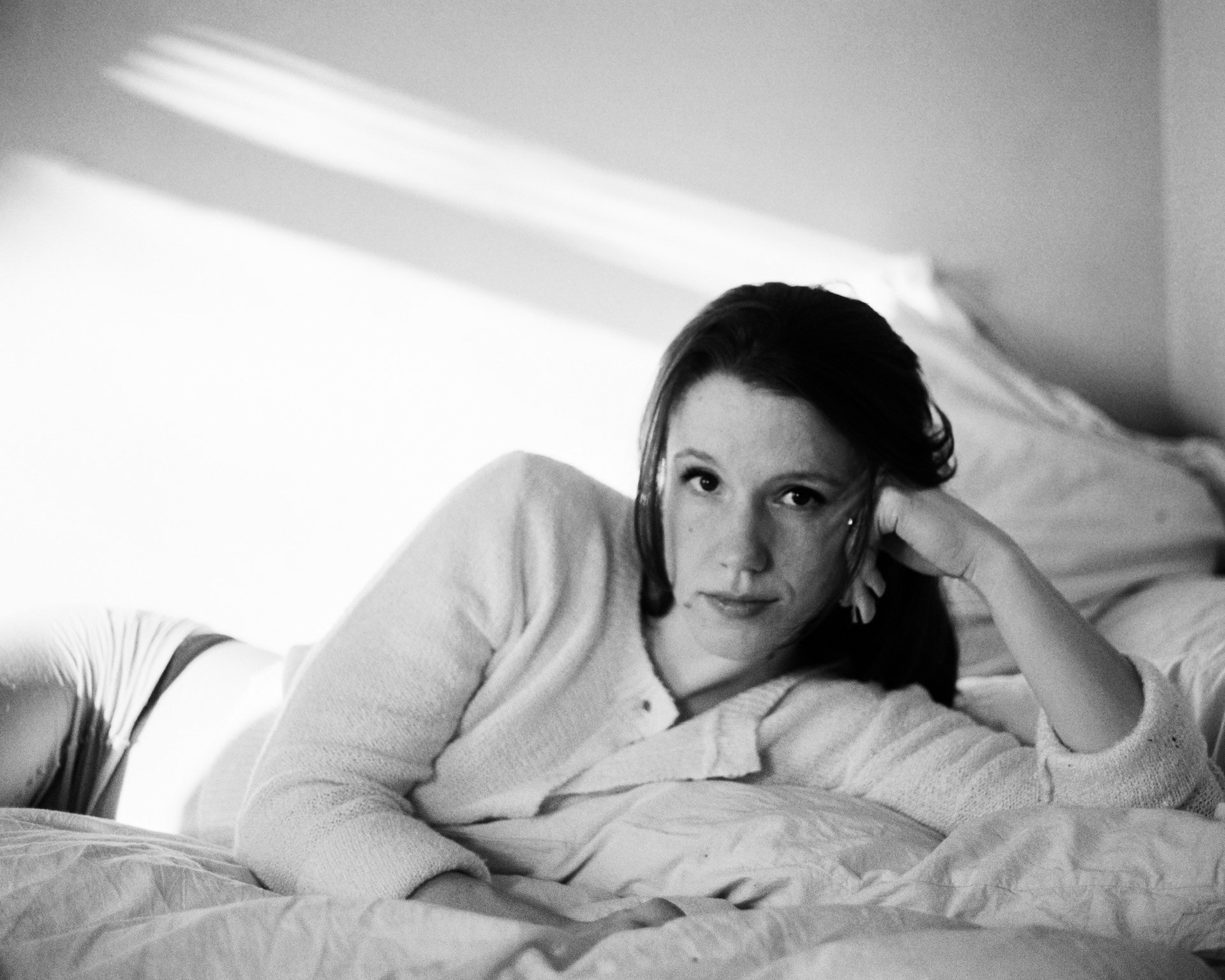
In 2022, Caroline Macon Fleischer (MFA ‘20) released her debut novel The Roommate, a work she started as a graduate student at DePaul for her MFA thesis. Fleischer is a writer, editor, and theatremaker, and teaches creative writing at Loyola University. Her second novel, A Play About A Curse, is set for release on October 21, 2025, via CLASH Books. We sat down to chat about the upcoming release and its key inspirations, writing processes, her time at DePaul and background in theatre, and what advice she has for students.
This interview has been edited for clarity and brevity.
Ex Libris: What led you to the MFA program at DePaul?
Fleischer: In high school, I was struggling with grades, and I discovered playwriting in a roundabout way. I submitted to this new play competition, and it won and went to the Texas Thespian Festival. I had never been an actor, but I got to write and see it up on stage. It was so exciting, and I knew that was what I wanted to do.
At the time, I discovered that the Theatre School at DePaul was one of only two programs that had an undergraduate playwriting program. So, I moved to Chicago, and double majored in English.
I took around five years off after graduating and knew I wanted to teach, so I started the MAWP program at DePaul. During my time there, they launched the MFA program, and I was in the first group of MFA students.
In theatre, you’re allowed to teach as an adjunct, so I did that during the second half of the program. And then I went on to teach creative writing at Loyola University. My experience with both theatre and writing gives me this drive to bring a live community feeling to publishing.
Your debut novel The Roommate came from what you worked on for your MFA thesis. What was that experience like for you, from writing to getting published?
Graduate school was interesting for me because I had a baby at home, was working, and then took night classes. And it’s funny because in retrospect I’m like, ‘That was such a positive experience. I’m so glad I got to do that.’ But in the moment, I was like, ‘I’m not making any friends.’ It just felt different. But the good thing is, I had all this time at home to write, and I was able to really hunker down and do the thing.
So, I wrote the first draft of The Roommate during the program and got all these notes back from Rebecca Johns-Trissler, who was my thesis director. The book changed a lot, but the characters and the setting remained the same. But it’s all sort of a blur; it goes by quick.
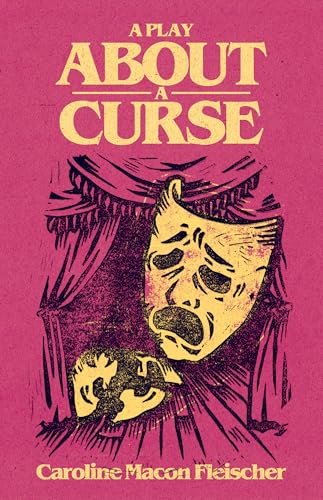
Your second novel, A Play About A Curse, combines your background and interest in theatre with your passion for writing. What are some inspirations for the book?
So, there are two major DePaul inspirations. When I was a freshman, I took a class with Kathleen Rooney (Distinguished Writer in Residence) and she was a huge mentor for me. And we’ve become very good friends. The same goes for Heidi Stillman, who was the artistic director at Lookingglass Theatre Company and was brought into DePaul to direct my play in the New Playwrights Series—“The Women Eat Chocolate.” I was lucky to maintain these friendships, and A Play About A Curse looks at what happens when it’s the opposite—what if you turn on your mentor?
A lot of the book is based on French mythology and how the curse works in that tale. I traveled to Annecy, France because the third act takes place there, and I’d spent all this time on Google Maps walking through the city to refer to places I was mentioning. And then I was like, screw it, I’ll go there. So, I got to see the actual art exhibit talked about in the book and learn more about the history of Machiavellian, which the curse is based on.
The third act is my favorite because it’s almost a departure. It’s suddenly in all prose and becomes my honest analysis of this mythology. A character travels there, and it is part of the story, but it’s like nonfiction, and it feels like my voice, whereas the rest of the time I was playing the characters.
Another inspiration was the tragic hero structure, and I followed the 12 parts exactly.
Was your writing process different for your second novel versus your debut?
For The Roommate, I spent a lot of time at home, during the pandemic, late night writing, and not seeing my friends. But for A Play About A Curse, I wrote it in the structure of a play, and a lot of the scenes are written as dialogue. Much of my process was walking around and talking to myself on voice memo, so that I could actually visualize it in space.
What do you hope people take away from reading A Play About A Curse?
I genuinely hope people are able to have fun reading it, and I’d love it if students especially saw the potential in it for adaptation. I tried to leave it loose enough if theatre students wanted adaptation practice, or there are tons of dialogue in here for auditions. I really want students to be able to find it and play around with it.
The thing that I like the most so far is that people have very different interpretations of what the curse is and how exactly it works. And I have my own theories on it, but I’ve been cautious to share them. I think what I tried to do in the book was build three different answers that could be supported by textual evidence, so it’s not vague and nebulous. But I tried to give readers three different pathways, so it’s been cool to hear takes on that.
Do you ever feel pressure to maintain an online presence as an author, and how do you deal with it?
I have definitely felt that pressure, but I never succeeded, so eventually I gave up trying to build it up.
I was a lifelong blogger and started blogging when I was in middle school, and all through high school I had a Myspace, and for years I had a Tumblr. I have an archive of what I posted, and it’s nice to look back and see I did have a following in those spaces, and I was just sharing random stories. Then when the media switched to microblogging, I didn’t know what to do anymore. Not to be dramatic, but that shift was really hard for me!
I have to ask myself now, ‘Am I doing this because it brings me joy, or because I have to?’ And [thankfully] working with a publisher like CLASH books, they are also this multimedia rag tag of artists, so posting is less important to them.
What advice do you have for students and writers who are interested in publishing?
The thing that has helped me find the most success is being myself. I think being casual and willing to have a human connection is so much more important. Most of the opportunities I have gotten have been from meeting people in person. And that’s telling because you can send out thousands of emails and never get responses. But when you’re actually eye to eye with someone, that’s usually when people remember you or want to know more about you. There’s a place to be professional but overall, drop the formality and be you. You can look at all these people who have completely shifted the industry and they’re all complete weirdos who just decided to do their own things. So, I do try to remember that.
